
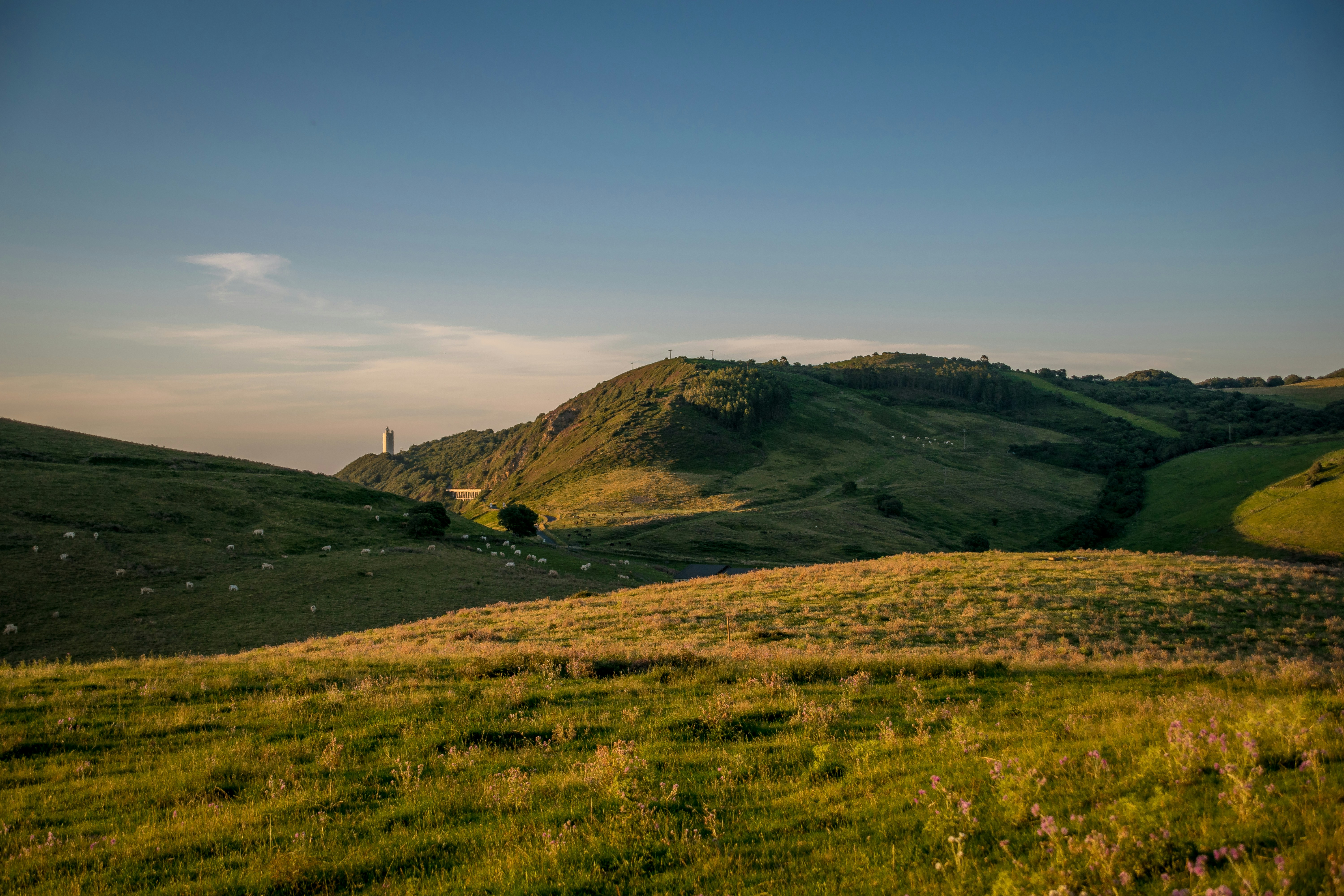
Whether you are looking for a secluded homesite with a panoramic view or expanding your agricultural portfolio, buying a hillside property in the Loess Hills is a completely different game than buying on the flats. The very topography that provides those stunning vistas also introduces unique variables that can impact your investment, your building costs, and your long-term maintenance.
If you are considering a sloped listing this spring, here are the three critical factors you need to evaluate before you sign on the dotted line.
1. Soil Stability: More Than Just Dirt
In our region, the soil is our greatest asset and our biggest challenge. The Loess Hills are composed of wind-deposited silt that is famous for its "vertical cleavage." This means the soil can stand in steep bluffs quite well, but it is also highly susceptible to erosion once the vegetation is removed.
What to look for:
Signs of "Creep": Look for trees with "pistol butts"—trunks that curve at the base. This indicates the soil has been slowly shifting downhill over decades.
Existing Slumps: Check for areas where the earth looks like it has "melted" or dropped suddenly.
Vegetation Cover: A hillside covered in deep-rooted native grasses or established timber is much more stable than one that has been overgrazed or cleared.
2. Drainage: Controlling the Flow
On a flat lot, water generally stays where it falls. On a hillside, every gallon of rain becomes a moving force. Improper drainage on a slope doesn’t just lead to a wet basement; it can lead to foundation failure or significant land loss.
What to look for:
Natural Coulees and Washes: Walk the "draws" (the low points between hills). Are they showing deep carving or "head-cutting" (where the earth is falling away at the top of a wash)?
Building Site Orientation: If you plan to build, look for a "bench" or a natural flat spot. Building against the slope requires sophisticated (and expensive) retaining walls and French drain systems to divert water around the structure rather than letting it press against it.
Runoff Impact: Consider where the water goes once it leaves your property. Ensuring you aren’t flooding a neighbor or a public road is a legal and ethical necessity.
3. The "Non-Grid" Reality: Where is the Line?
In much of the Midwest, property lines follow a neat, predictable grid. In the Loess Hills, nature didn’t follow the surveyor’s ruler. Ridges, bluffs, and winding creek beds often dictate where a property begins and ends, and these "metes and bounds" descriptions can be tricky.
What to look for:
Fencing vs. Legal Lines: Never assume an old barbed-wire fence is the true boundary. In hilly terrain, fences were often placed where it was easiest to dig a post hole, not necessarily where the legal line sat.
Easements for Access: Hillside properties often require shared driveways or specific easements to reach the best building sites. Ensure these are legally recorded and well-defined.
The Importance of a Modern Survey: Topographical maps are great, but a professional survey is non-negotiable. You need to know exactly how much of that ridge belongs to you before you start clearing a view.
The Bottom Line
Hillside properties offer a lifestyle and a level of privacy that flat land simply can't match. However, they require a higher level of "due diligence." Working with a team that understands the specific geology and land-use laws of the Loess Hills ensures that your dream view doesn't turn into a landslide of unexpected costs.